


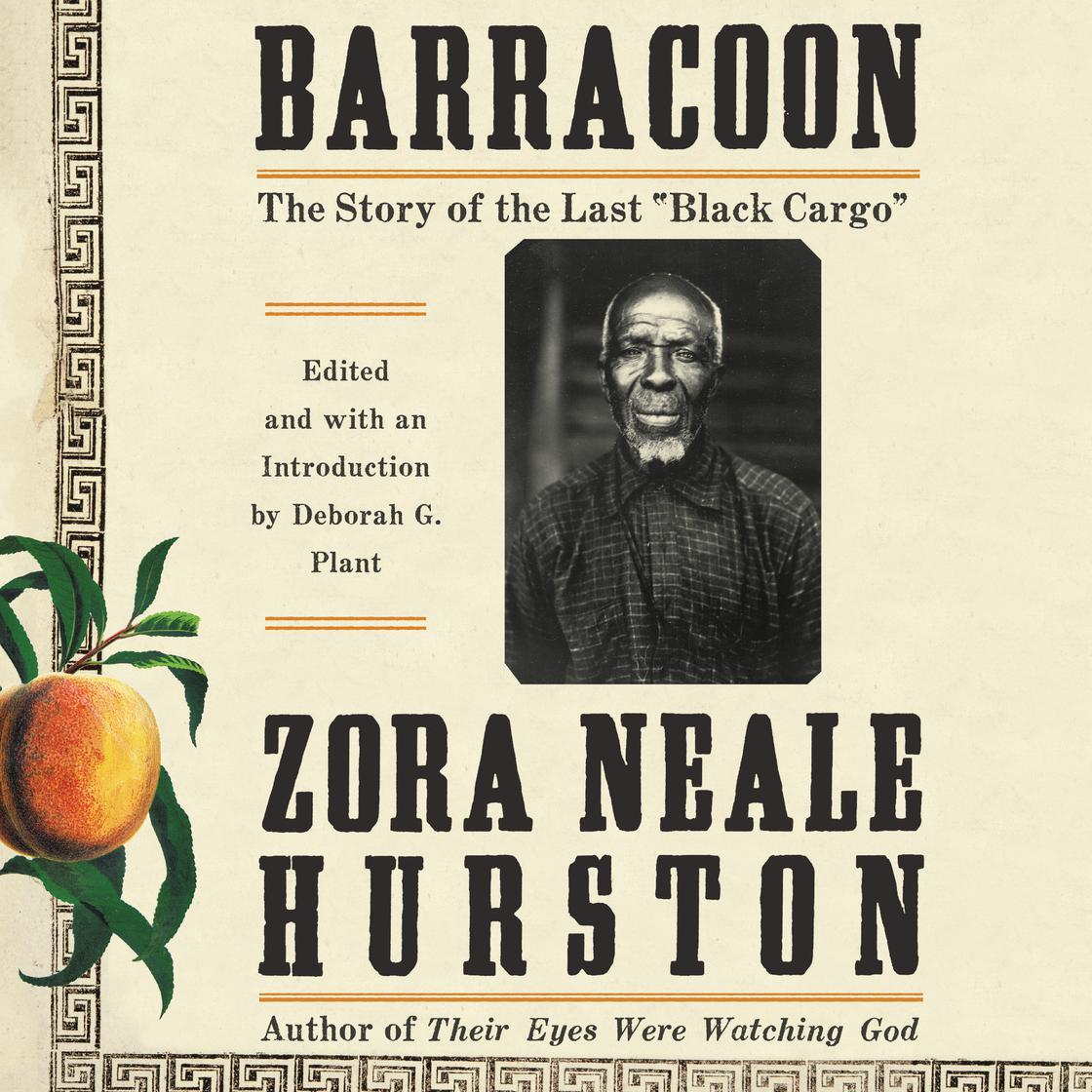
Zora Neale HurstonBarracoonThe Story of the Last “Black Cargo”The last survivor of the last slave ship, in his own words. Recorded in 1927. Published in 2018.
- Not ancient history. Cudjo Lewis died in 1935, four years before The Wizard of Oz reached theaters.
- The only account of its kind. One man who survived the raid, the Middle Passage, slavery and emancipation, and lived to tell it.
- Buried for 85 years. Hurston refused to rewrite his words for publishers. It reached print in 2018.
- In his own voice. Recorded exactly as he spoke, edited by Deborah G. Plant, with a foreword by Alice Walker.
Couldn't load pickup availability
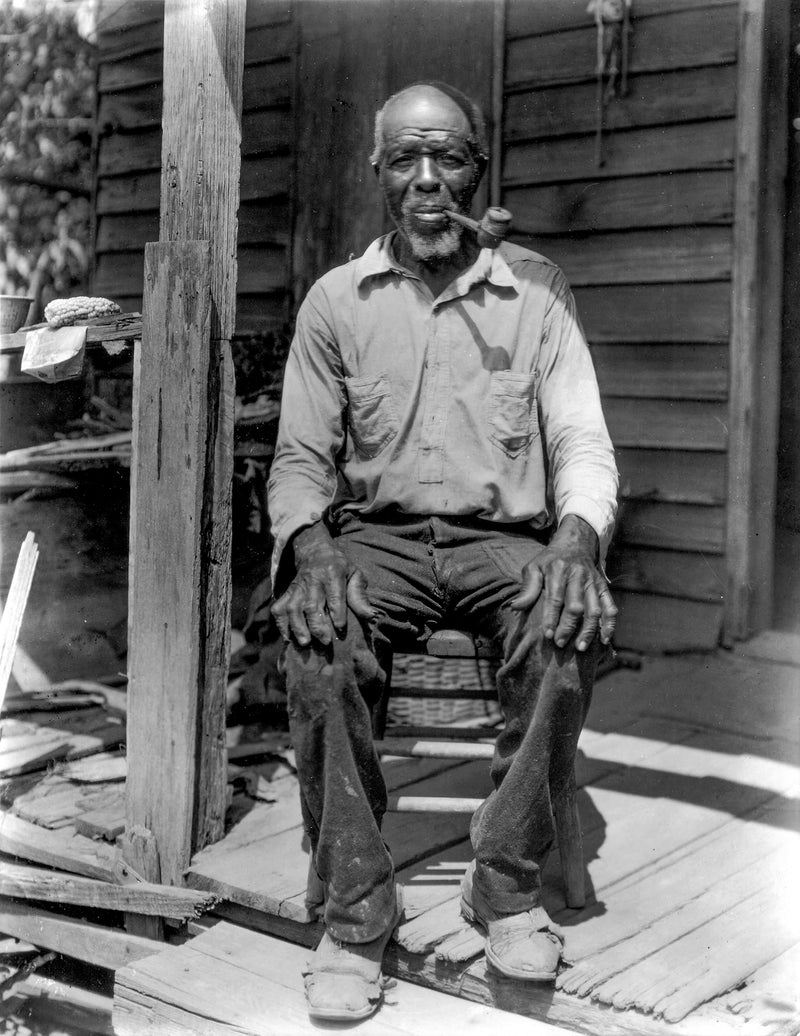
The man in the photograph
He was alive when Popeye hit the screen.
Slavery is taught like ancient history. It isn't. Cudjo Lewis died in 1935, four years before Dorothy clicked her heels in Technicolor.
He was born Oluale Kossola in West Africa. At nineteen he was seized in a raid, held in a barracoon, and loaded onto the Clotilda, the last ship known to bring enslaved Africans to the United States. It arrived in Alabama in 1860, more than fifty years after the transatlantic trade had been outlawed.
After emancipation he and his shipmates could not get home. So they built one, founding Africatown outside Mobile. He lived there for the rest of his life. The porch in this photograph is his own.
- 1860
Taken from West Africa aboard the Clotilda at nineteen.
- 1865
Freed after five years of slavery, with no way back across the ocean.
- 1927
Zora Neale Hurston sits with him in Africatown and writes down every word as he speaks it.
- 1935
He dies in Alabama, the last living person who remembered the Middle Passage.
- 1939
The Wizard of Oz reaches theaters. Four years later. Not four hundred.
- 2018
Hurston's manuscript is finally published, 85 years after publishers turned it down.
Publishers wanted his speech rewritten into standard English. Hurston refused, and the book sat in an archive instead. What you are buying is the version she fought for: his account, in his own voice.
About the author
She chose the archive over the edit.
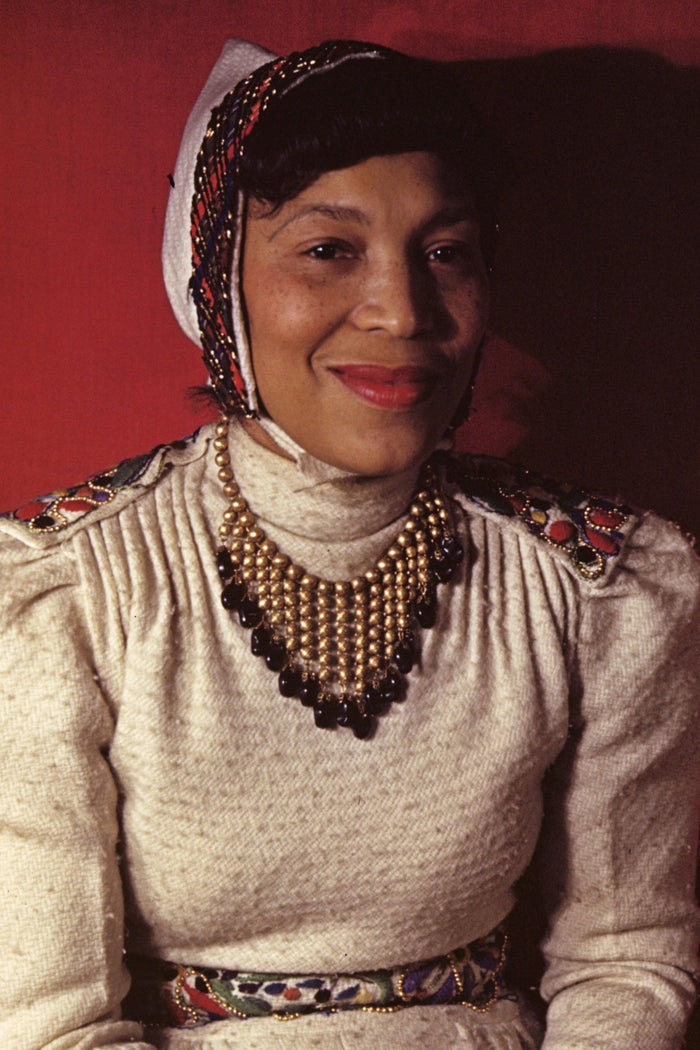
Zora Neale Hurston was one of the foremost anthropologists of her generation, and the writer who gave us Their Eyes Were Watching God.
Trained under Franz Boas at Barnard, she spent years in the field across the American South and the Caribbean, collecting folklore and testimony from people whose accounts had never been written down. She went to Alabama in 1927 to sit with Cudjo Lewis, and returned to spend months in his company.
She took down his story as he told it, in his own speech, and refused to convert it into standard English when publishers said the dialect would not sell. The manuscript went into a drawer instead. Hurston died in 1960 in relative obscurity, buried in an unmarked grave in Florida, her work largely out of print.
It was Alice Walker who went looking for that grave in 1973, marked it, and set off the revival that returned Hurston to the center of American letters. Walker wrote the foreword to this edition.
- 1927The year she recorded his account in Africatown
- 85 yearsThe manuscript sat unpublished
- 2018Published at last, as she wrote it
She could have had the book published in her lifetime. The price was his voice, and she would not pay it.
What readers say
-
Nia C. September 17, 2026
A powerful firsthand account
I expected a traditional history book, but this felt much more immediate and personal. Cudjo's voice makes the history feel close in a way I wasn't prepared for.
-
Evan J. September 17, 2026
Stayed with me
There were several moments I had to stop and think about what I had just read. It is a short book, but the story carries a lot of weight.
-
Tasha M. September 16, 2026
So different from a textbook
Reading one person's memories changed the way I connected with this period of history. The personal details are what made the book stand out for me.
-
Jordan F. September 16, 2026
Glad I picked this up
I knew Zora Neale Hurston's name but had never heard about this interview. I finished wanting to learn much more about Cudjo, the Clotilda, and Africatown.
-
Maya D. September 15, 2026
Raw and memorable
The way Cudjo's speech is preserved gives the book a very distinct feeling. Once I adjusted to the dialect, I appreciated how much of his personality came through.
-
Sean R. September 15, 2026
An important read
Some sections are difficult, but that is also why the book feels important. It gave me a perspective I had never gotten from a classroom.
Before you order
Questions, answered.
In 1927 Zora Neale Hurston travelled to Africatown, Alabama, to interview Cudjo Lewis, the last living survivor of the Clotilda, the last ship known to bring enslaved Africans to the United States. Barracoon is his account of his life, from the raid on his village through the Middle Passage, slavery, emancipation and the decades after, recorded in his own words.
Hurston wrote Cudjo's speech exactly as he spoke it. Publishers wanted it rewritten into standard English, saying the dialect would not sell. She refused, and the manuscript stayed unpublished for 85 years before reaching print in 2018, in the form she intended.
It takes a few pages to settle into, and then it carries the book. Cudjo's speech is what makes his account feel like listening rather than studying. This edition includes an introduction and notes from editor Deborah G. Plant to help with context.
Short. Most readers finish it in a sitting or two. It is not a long history of slavery; it is one man's testimony, which is what gives it its weight.
Anyone who wants primary-source history rather than a summary of it. It is widely used in classrooms and reading groups, and it is a natural next read for anyone who knows Hurston from Their Eyes Were Watching God.
The published edition of Hurston's manuscript, edited by Deborah G. Plant, with a foreword by Alice Walker. Cover and format are shown in the product photos.
It's a book people finish and want to talk about, which makes it a strong gift for readers of history, teachers and students. Many buyers take a second copy to pass on.
Tracked U.S. delivery on every order. Delivery times vary by location. If something is wrong with your order, contact our support team and we'll help with an eligible return or replacement.
The truth was too raw for publishers in 1931. You're reading the version she refused to change.